5 Clauses Every US Company Should Require in an Offshore Engineering SOW
Hầu hết các hợp đồng gia công phần mềm truyền thống (outsourcing SOW) sử dụng các mẫu chung chung từ 10 năm trước. Chúng bảo vệ công ty outsourcing thay vì bảo vệ tài sản trí tuệ (IP) của doanh nghiệp Mỹ. Khi có tranh chấp hoặc vòng gọi vốn Series A/B, kiểm toán pháp lý (Legal Due Diligence) phát hiện lỗ hổng: IP chỉ chuyển giao khi thanh toán đợt cuối, dữ liệu mã nguồn lưu trên laptop cá nhân của lập trình viên nước ngoài, và luật áp dụng lại thuộc quyền tài phán sở tại.
Một lỗ hổng IP có thể làm đình trệ vòng gọi vốn $20M. Ba rủi ro chết người gồm: 1) 'Work-for-hire' không tự động áp dụng xuyên biên giới nếu thiếu điều khoản Assignment tường minh; 2) 'Delayed Assignment' giữ con tin mã nguồn khi có tranh cãi về giờ làm; 3) Rủi ro rò rỉ dữ liệu khi dev pull code về máy cá nhân không có MDM (Mobile Device Management).
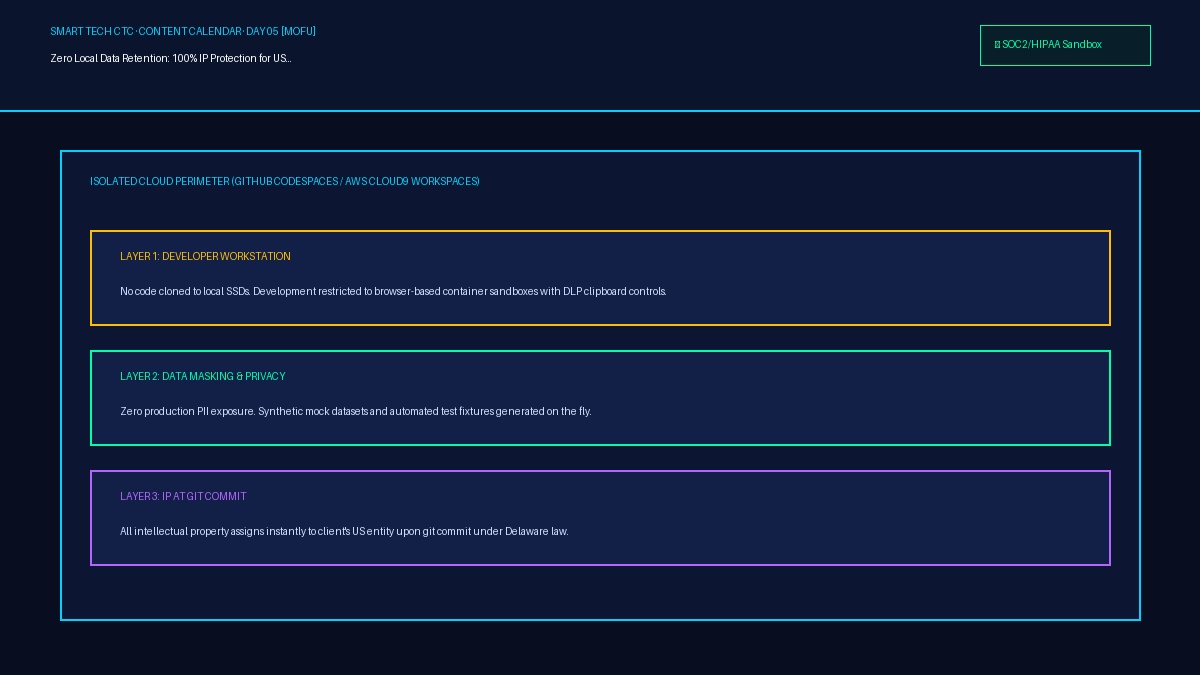
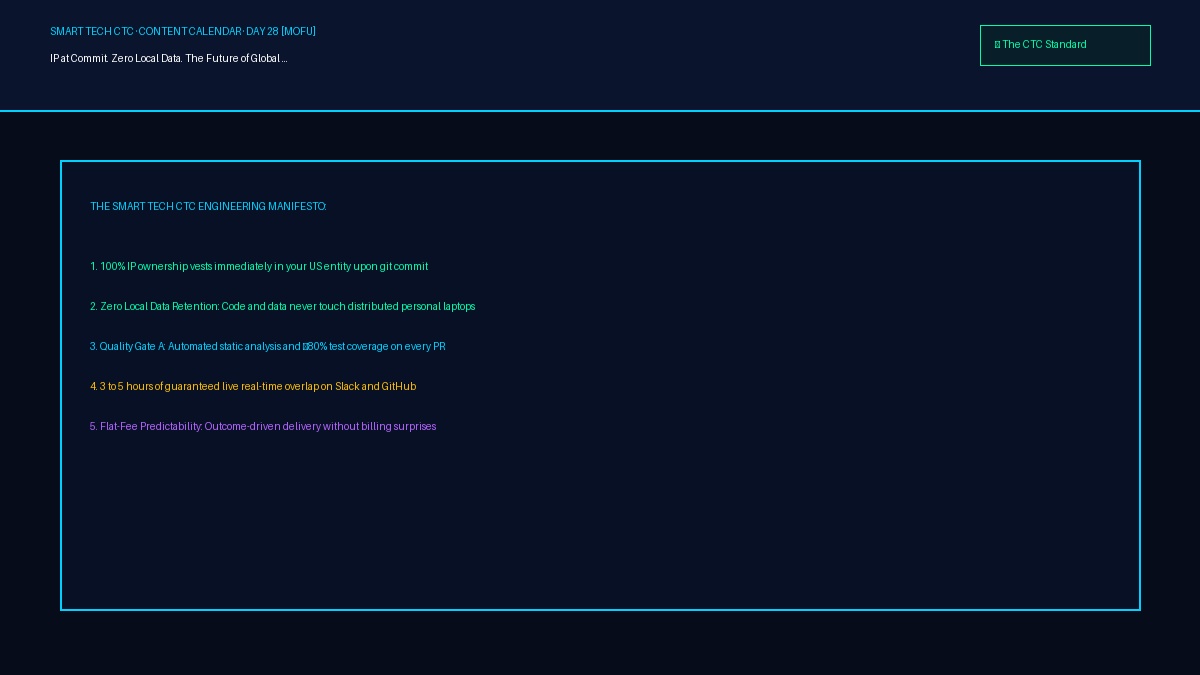
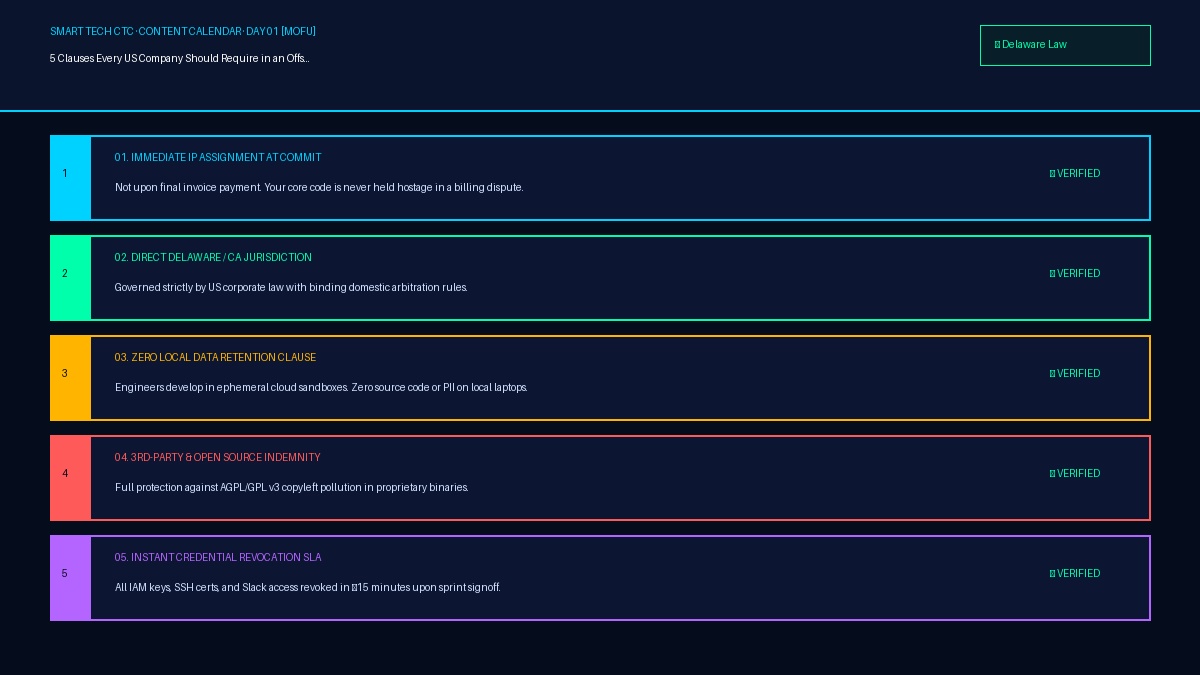
Smart Tech CTC thiết lập Chuẩn Hợp đồng Kỹ thuật SOW Delaware: 1) IP Transfer 100% tại thời điểm git commit; 2) Quyền tài phán tòa án Delaware/California; 3) Zero Local Data Retention (chỉ code qua Cloud Workstation/GitHub Codespaces); 4) Sẵn sàng ký BAA (HIPAA) và DPA (GDPR); 5) Bồi hoàn vô điều kiện nếu phát sinh vi phạm bản quyền thư viện bên thứ 3.
📖 Xem toàn văn bài LinkedIn đã duyệt Nhấn để mở / đóng ▼
An offshore engineering SOW should do more than define rates and sprint dates. It should make ownership, access, and exit behavior unambiguous before anyone opens a repository.

Start with present-tense IP assignment. “Will assign after final payment” creates avoidable uncertainty; the agreement should state when rights transfer and cover code, documentation, designs, and inventions. Next, define the approved development perimeter: source code and test data stay inside a customer-managed cloud workspace and customer-controlled repositories. Access should be least-privilege, logged, and revocable.

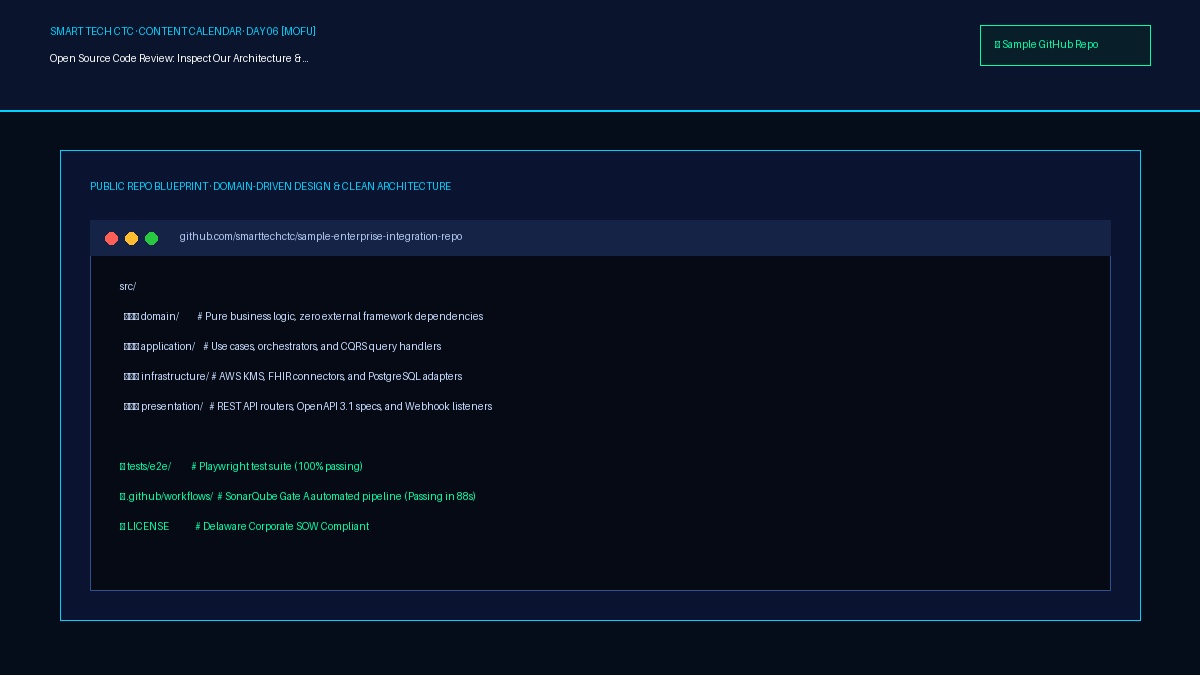
The SOW should also establish an open-source review process. That means inventorying dependencies, checking licenses, and escalating copyleft or restricted components before merge—not offering an absolute guarantee that no issue can ever occur. Add a practical offboarding checklist for identities, tokens, devices, branches, and retained materials. Finally, specify governing law, dispute handling, security obligations, and any DPA or BAA required for the actual workload.

These clauses reduce ambiguity, but they do not replace advice from qualified counsel. Requirements vary by jurisdiction, data type, and corporate structure.

If you are evaluating a cross-border engineering partner, ask legal and engineering to review the same SOW together. Comment “SOW” and Smart Tech CTC will share the checklist we use to structure that review.